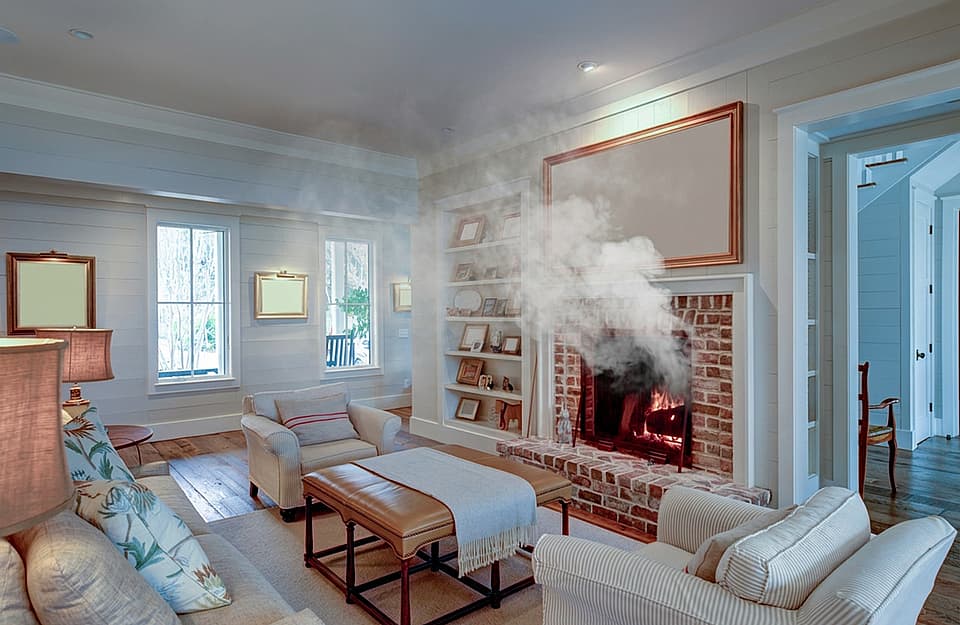
Smoke in the room means the draft lost the argument. Sometimes the damper never opened. Sometimes the flue is blocked or coated. Sometimes the house is pulling harder than the chimney. Here is how to sort it without turning one smoky evening into a panic.
Why Is My Fireplace Smoking?
Smoke from a wood fire should go up the flue and out the top. If it rolls into the room, something is interrupting that path. One puff after a long layoff can be a cold flue that has not warmed up yet...or maybe it's something bigger. Smoke every time you light a fire is a system problem, and it will not sort itself out - call in a professional to troubleshoot the issue.
- The Damper is Closed (or Stuck): Think of the damper as the chimney's front door. If it's closed or only half-open, smoke has nowhere to go but right into your room.
- The "Cold Chimney" Effect: Cold air trapped in your flue acts like a heavy blanket pushing smoke downward. Warming up the chimney first with a rolled-up newspaper torch clears out that cold air pocket.
- Wet or Unseasoned Wood: Burning damp or fresh wood creates way more smoke and creosote than heat, turning your cozy fire into a smoke machine.
- A Blocked Chimney Flue: Leaves, twigs, old bird nests, or heavy creosote buildup can clog the flue and block airflow.
- Negative Air Pressure in the Room: Modern homes are tightly sealed. If bath fans or kitchen hoods are running, they can pull air - and smoke - back down the chimney.
- It's Just Too Windy Outside: High wind gusts blowing over your roof can create a downdraft that forces smoke back down into the hearth.
Can I Troubleshoot a Smoky Fireplace Myself?
Stay off the roof. These are the living-room checks, not a ladder project.
- Confirm the damper is fully open, not half-latched
- Turn off the range hood, bath fans, and dryer while you test the draft
- Crack a nearby window if the house feels tight and the smoke still spills
- Give a cold flue a minute to warm before you build a big fire
If those steps clear it once and it comes right back, stop experimenting. The next answer is above the firebox, where you cannot see it.
“Smoke every time you light a fire is a system problem, and it will not sort itself out - call in a professional to troubleshoot the issue.”
What Should I Do If My Fireplace Is Actively Smoking Right Now?
Immediate Safety Risk
Smoke contains carbon monoxide and fine particulate matter. If your living room is rapidly filling with thick smoke, your smoke alarms are going off, or you start feeling dizzy or lightheaded, don't try to troubleshoot. Gather your family and pets, step outside into fresh air immediately, and call emergency services. Your safety always comes first!
Stop Adding Fuel Immediately
First things first: do not add any more logs to the fire. Let whatever is currently burning starve out.
Important Safety Note: Avoid pouring water directly onto a wood fire in your hearth unless it is an absolute emergency. Splashing water on burning logs creates a huge blast of hot steam, flying ash, and potential glass cracking that can easily cause severe burns.
Crack a Nearby Window
It sounds counterintuitive to let cold air in, but crack a window near the fireplace by a few inches right away.
Modern homes are built so tightly that fireplaces often run out of air to draw upward, creating negative air pressure. Cracking a window breaks the vacuum, feeds fresh air to the hearth, and immediately helps flip the draft so smoke heads back up the chimney.
Safely Check the Damper
Put on thick hearth gloves or grab a long metal fireplace tool to check your damper handle.
Is it fully open? Sometimes a damper slips partially shut, or someone forgets to open it all the way before lighting up. Opening it fully gives the smoke an instant exit route.
Shut Off All Exhaust Fans
Go turn off kitchen range hoods, bathroom vent fans, and your clothes dryer.
These appliances suck massive amounts of air out of your house. If your home is sealed tight, they will literally pull smoke right out of your chimney and pull it back into your living room.
Carefully Spread Out the Fire
Using your metal fireplace poker or shovel, gently spread the burning logs and hot coals across the bottom of the firebox.
Flattening out the fuel bed lowers the overall core temperature of the fire, helping the active flames die down much faster so smoke production drops.
Smoke sticking around?
We answer the phone.